Wednesday, 12 March 2014

National Theatre Open Day

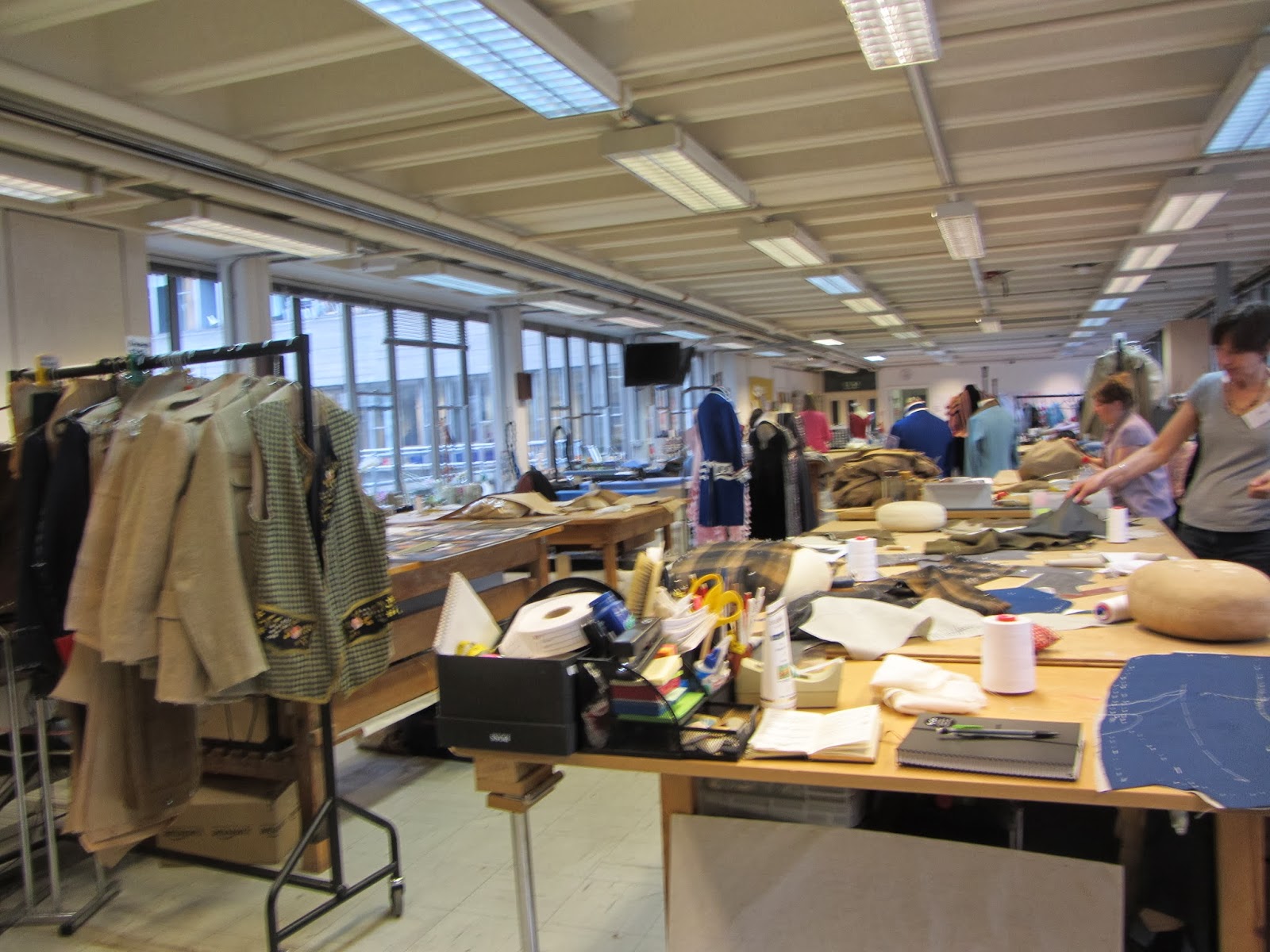
A couple of days ago I was lucky enough to be able to visit the National Theatre workrooms and complete a mini workshop in their womenswear department. In a group of ten we were shown the wonderful workrooms that help create the visuals that are performed on the National Theatre stages as well as being taken on a tour backstage, on stage and in the auditorium of the Olivier Theatre. The costume making workshop is shown below. Sorry for my poor blurry photography!

National Theatre Costume Workroom
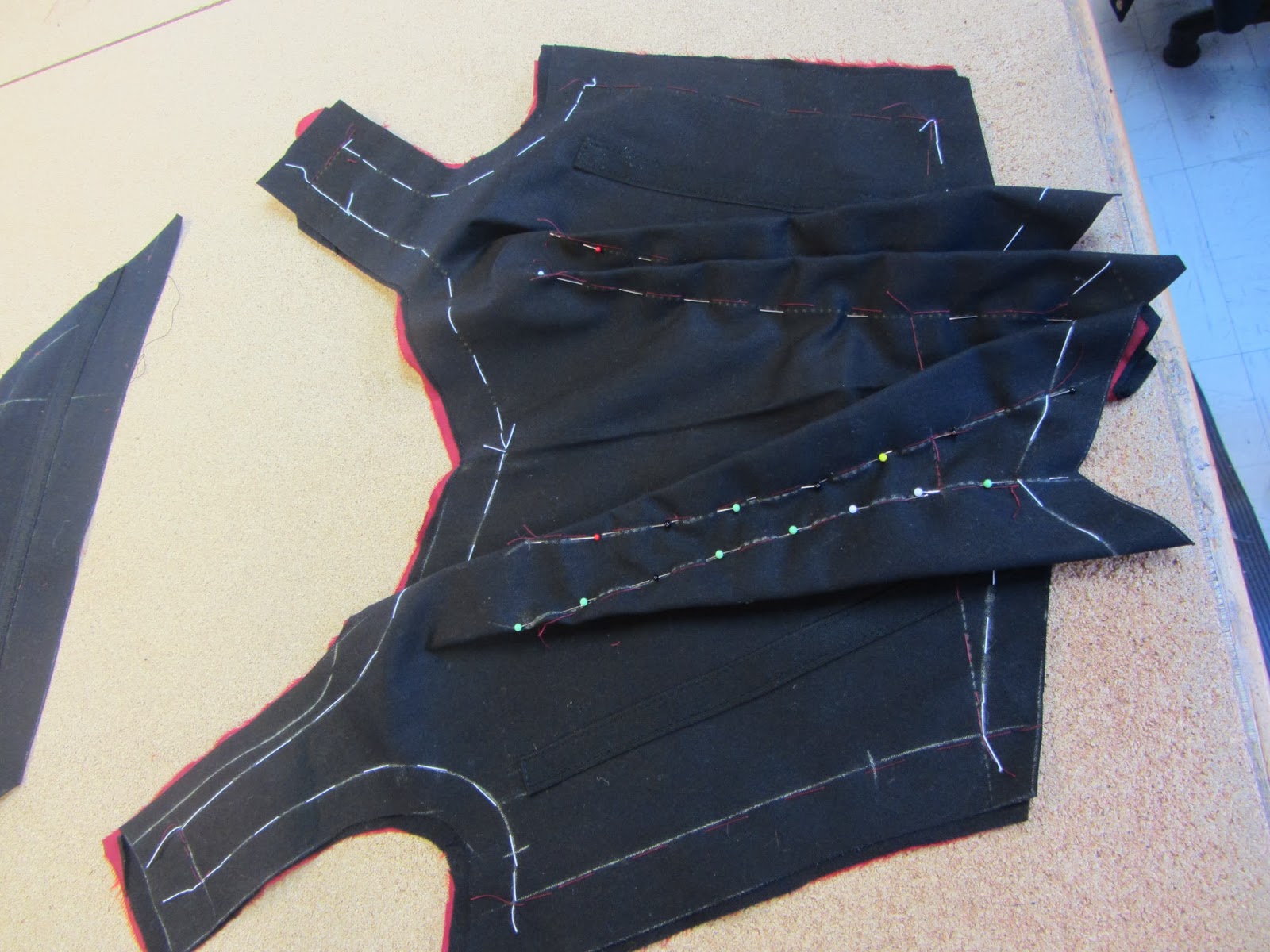
We then split into different parts of the costume department (menswear, womenswear and alterations) and had tuitions with members of the costume department. I was doing womenswear and made a simple sleeveless boned bodice. Although this is something I have done before I loved having the luxury of one on one tuition. It made this a really fun and relaxed workshop.


This workshop was a trial run and something they haven't done before. Their idea was to make an open day more one on one so people wouldn't feel as intimidated to ask questions. I personally think it worked really well and hope they will do it again. However, I would recommend this open day to first year students as a few of the other girls on the workshop also noted that the skills we were taught were a little basic for second year costume students.

Take a look at the National Theatre's website to keep updated on upcoming open days and they are apparently soon going to post more work experience opportunities. Exciting!

Monday, 10 March 2014

Tweed Waistcoat

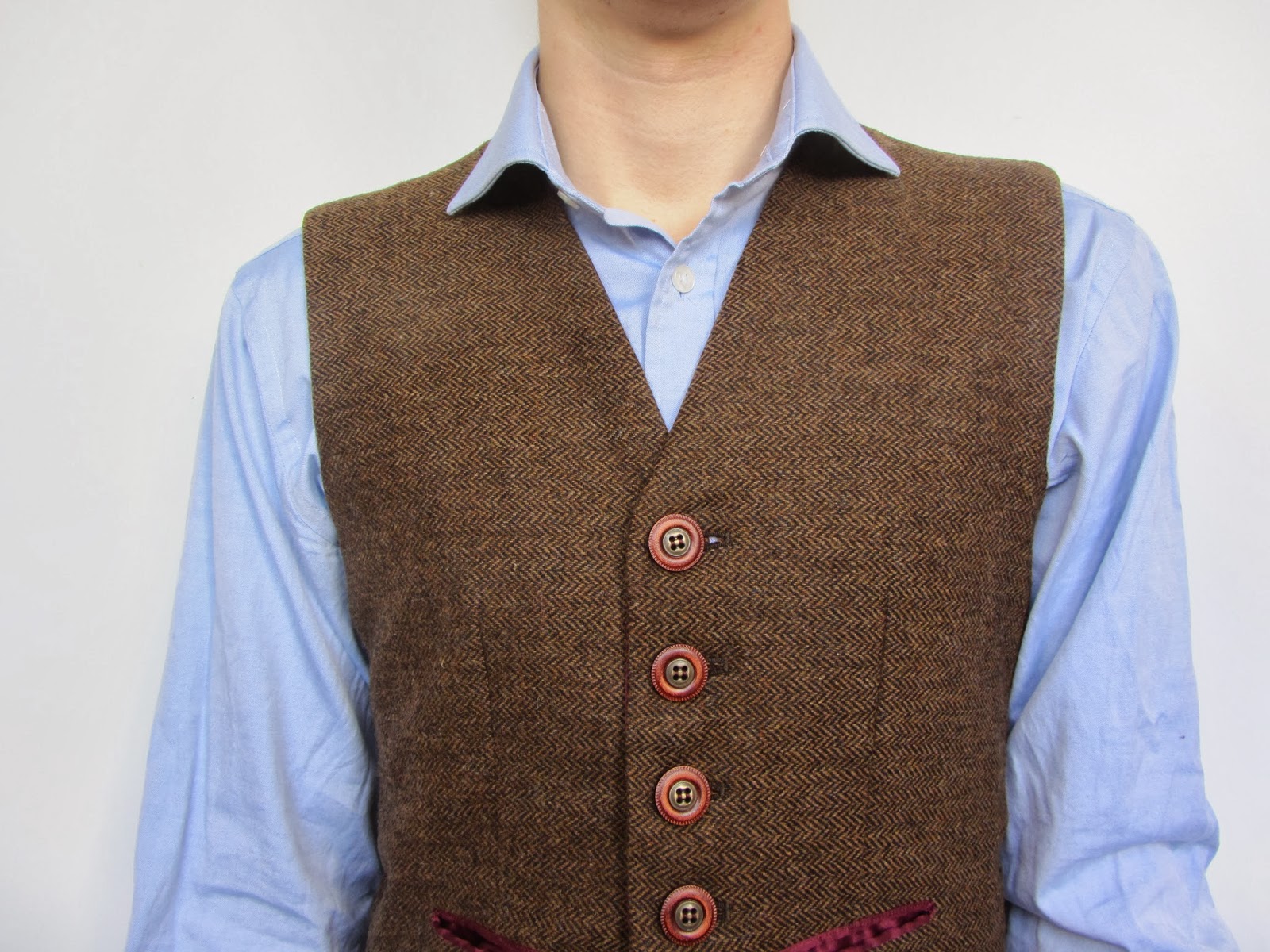
For the past few weeks I have been on a work placement as part of my uni course which has given me the luxury of having most evenings off. So I decided to set myself a little project of making my other half a waistcoat. I drafted the pattern from the book Metric Pattern Cutting for Menswear and altered it to fit. It is far from perfect but not bad for a first attempt :)


Due to him having such expensive taste it meant me spending silly amounts on a bit of wool tweed and 100% silk satin lining (both from A1 Fabrics, Goldhawk Road). I think he was happy with it! For more info about where to buy fabrics in London take a look at my blog post here. 


Buttons are from Macculloch and Wallis and I got the key hole and bar tack button holes done at DM Buttons. The man who owns the business there is really sweet and bashes out the holes within seconds. The shop itself is around Berwick Street area down a little alley way called Wardour Mews and his shop is down some stairs underground so it's a little strange so maybe take someone with you on your first visit! He also covers buttons as well at very reasonable prices (see here).


Saturday, 1 March 2014

Oscar Predictions from LCF Costume Experts

My tutors at London College of Fashion were recently interviewed for the Times to get their opinions on the Oscars this year. They outline a really good breakdown of the nominated films for costume design and what makes good costume for film.

'What role do costumes have in blockbuster movies?
Costume Design should be more than just clothes on an actor, and definitely more than just the fashion of a particular time. A costume has to enhance the actor’s performance and helps to move the narrative along. The costume should give the audience clues to the character within the narrative without the costume becoming ‘seen’. For me, a good costume is one that goes unnoticed, one that subtly fits with the character and adds to the story and the performance.'


Read the full article here.

Find out the Oscar award winners tomorrow (02/03/2014) on their website.
See the full Oscar nominations here.

The Grandmaster -
Costume Designer: William Chang Suk Ping

American Hustle
Costume Designer: Michael Wilkinson

The Invisible Woman
Costume Designer: Michael O'Connor

12 Years a Slave
Costume Designer: Patricia Norris

The Great Gatsby
Costumer Designer: Catherine Martin

Friday, 21 February 2014

Drawing is seeing

Today at uni we had a drawing master-class with theatrical costume designer Anne Curry which was really great. She was such a character and really keen to help us improve and develop our drawing skills using a variety of mediums. Have a look at her work here.

Anne Curry - Queen Elizabeth I


Drawing workshop with Anne Curry
Bryony Hamer - Poster paints and oil pastels


This got me thinking back to when I started to learn to draw on my art foundation and how my tutors at the time would really drill into me how important it is to draw. I couldn't agree more. The thing I love most about drawing is that it's one of the rare occasions where there is really no wrong way to do it. I just think it's a beautiful way to express yourself. I mean, yes you can technically be a talented drawer in terms of proportion and accuracy but the beauty of drawing is that you are able to create a piece of art that is seen through your eyes. Drawing has no limitations and it is a way of expressing yourself that all languages can understand and/or can interpret in their own way.

In my opinion, drawing is more about seeing that actually putting pencil to paper. By really looking you are able to understand what you are drawing. It is that level of concentration that will allow you to create an image that is seen and interpreted through your eyes and I just think it is a beautiful form of communication.

I saw the video 'Ruth Drawing Picasso' by Rineke Dijkstra and Fiona Tan at the Accedemia in Florence a few years ago and it has stuck in my mind ever since. It really demonstrates what I mean when I say drawing is seeing.

I think you can see it at the Tate Liverpool but take a look at a short clip of it here.

Sunday, 16 February 2014

What to have in a sewing kit

So now is roughly that time of year where people are applying to art college or university. Good luck if you have any interviews or portfolio reviews! I thought it would be a good time to post about what is needed for a basic sewing kit for those of you going to study something fashion or costume related – or if you just fancy starting to learn to sew J

Before I started my first year of university I was sent a list of things that I needed to buy which scared me as I didn’t have a clue what a lot of the stuff was. So I figured it might be helpful for me to outline what you need, what they are, how much you should spend and where to buy them.


What to have in your sewing kit


Sewing bag/purse

Something to put all your kit it. I wouldn’t recommend a box as they’re just too heavy. Just something perhaps the size of a large pencil case will do.


Fiskcars Embroidery Scissors
Fabric Scissors, Pinking Shears, Embroidery Scissors

Fiskars Dressmaking Shears
Fiskars Pinking Shears

Price varies.
Investing in a good pair of fabric scissors is pretty essential. Spending a good amount of money normally means that they will be a good pair but as a student I didn’t want to go too overboard. Fiskars are a good brand costing around £25 a pair and around £10 for embroidery. As you grow more experienced you will probably end up buying a few different pairs for cutting different fabrics (eg. Really sharp for silks etc.).
Look after your scissors – ie. Don’t cut paper with them!


Tape measure


Tape Measure
Approximately £1.
One with inches and cm is handy.


Hand needles

Embroidery needles
Leather needles

Approximately £1.50 per pack.
A range of different sizes, embroidery, leather, machine needles of different sizes etc.


Thimble


Thimble

Approximately £1.50.
Look after your fingers!


Black and White thread

Black and white thread

Approximately £2.50 for 100m of cotton. Around £2 for 1000m of polyester.
If you can fit other colours in there then great! It’s also good to have a cheap thread in there too for tacking.


Pins & Pin cushion


Dressmakers Pins
Around £2.50 for a box of pins. Pin cushions vary depending on design.
I have 2 pin cushions and one straps round my wrist which is really helpful. I try to have two boxes of pins in my kit because when I’m doing a large project I tend to get through them quite quickly.


Safety pins

Hemline 46mm safety pins

I would pay around £2 for 20 ish.
Large sharp ones – around 45mm. It is good investing in good quality safety pins.


Quick unpick/ Seam ripper


Seam Ripper
Around 50p - £1
If you have never used one of these before it will be your new best friend. It’s a really quick way of unpicking unwanted stitches and can rip through a seam in seconds. Be very careful with delicate fabrics though.


Tailor’s Chalk


Tailor's Chalk
Approximately 50p - £1 each
There are many types of tailors chalk nowadays. Chalk pencils, marker pens. I am sure they’re all very good but I still use old fashioned chalk. Make sure you keep it sharp with a chalk sharpener or just some scissors – not your fabric ones! I’ve been told to use yellow – probably because it shows up on most things.

Pattern Master


Pattern Master

About £25 – can be found cheaper on amazon.
I had no idea what this was before I started uni but I really don’t know how I managed without one now. It’s basically a 40cm ruler used for pattern drafting where you can check your lines are straight, perpendicular, draw curves – it’s fab!


Tracing Wheel & Carbon Paper

Hemline dressmakers carbon paper

Tracing Wheel

About £2 for a tracing wheel. Around £8 for 5 large sheets of coloured carbon paper.
A tracing wheel is used to mark on your seam allowance lines using carbon paper. Worth buying!


Loop Turner


Loop Turner
Around £4
So when you make rouloux loops you sew it inside out then turn it through. A loop turner will save you a lot of time and can pull it out the right way really quickly instead of fiddling about with your fingers.


Punch pliers


Punch Pliers

About £15
Maybe not essential for a beginner but you will need one eventually. Essential for corsetry.


Screw driver

For changing needles in machines etc. Very handy and necessary for your sewing kit.


Pencil and rubber

Always handy.


Where to buy supplies

Morplan – great for buying large quantities of items at cheap prices
Amazon – generally things are at a discounted price so a good place to buy your more expensive items like scissors
Your local sewing shop or haberdashery – you are likely to find a lot of the stuff in a standard sewing shop like needles, pins, chalk etc.
Muccoloch and Wallis – pretty much have everything but can be expensive
John Lewis – again, will probably have everything and should be good quality


I haven’t mentioned everything you will need but this is just a basic guideline to start off with. I’m sure as you’re going along sewing you will find new equipment that makes your life easier so please comment below on anything you find useful. Happy sewing!
Tuesday, 28 January 2014

Royal Opera House Live Screening - Giselle

The Royal Ballet's Giselle

Last night I went with my flatmates to see the Royal Opera House's live screening of the Royal Ballet's Giselle and thought it was just wonderful! I love the live screenings as people from all over the world can watch the same ballet as you. A lot of companies are doing this now. I know English National Opera are showing Peter Grimes tomorrow evening. I think this is changing the face of theatre and making it even more exciting.

I think Giselle was probably one of the most emotionally draining ballets I have ever watched. Giselle was performed brilliantly by the Russian principal dancer Natalia Osipova. She danced with precision, speed and  a way that made classical ballet look so natural and effortless. Of course I couldn't help notice the beautiful costumes. The silk skirts in particular moved so gracefully and really complimented the way she moved. It was really aesthetic to watch.

Natalia Osipova as Giselle

Natalia Osipova as Giselle
One of the things I really love about ballet is it's ability to tell a wordless story through dramatical music and body movements. To be a ballet dancer requires a skill like no other. Not only must the dancer concentrate on the choreography which requires a huge amount of balance and strength but also the ability to really become a character and tell a story solely through the way you move. I find it really fascinating.

Natalia Osipova brought a huge amount of emotion to the role for both the audience and the performers on stage. I was sat in the theatre just completely blown away with how the performance made me feel. Of course I could go on about the other dancers as they were all fantastic but I really felt Natalia was probably one of the best principal ballet dancers I have ever seen!

Giselle is on at the Royal Opera House until 10th February 2014.

Click here to see more of the Royal Opera House's live cinema season. Don Giovanni is screened on 12th February 2014 and looks fantastic!

Thursday, 9 January 2014

Invisible Design

When I tell people what I do (and I'm sure many girls on my course would agree with me) I generally get the response: "Oh, you can do a degree in Costume?" or "So you're doing a Fancy Dress degree?" or "Do you make big fancy ball gowns?".
In response to the last question, in a way, yes. But costume is so much more than that. To study costume design is essentially studying several degrees at once: Literature, Psychology, History as well as have a creative eye for design and be a damn good dressmaker! It's hard work!

Costume is technically more about character than the elaborative clothing which is why I want to focus this Blog post on contemporary costume to demonstrate what I mean.

Yesterday Jane Petrie (costume designer for Fish Tank, 28 weeks later, How I live now and more) came to my university to talk about her career in contemporary costume. She talked about how in some ways, contemporary costume is harder than period costume in the sense that the audience are more knowledgeable and can therefore be more critical of the costumes.
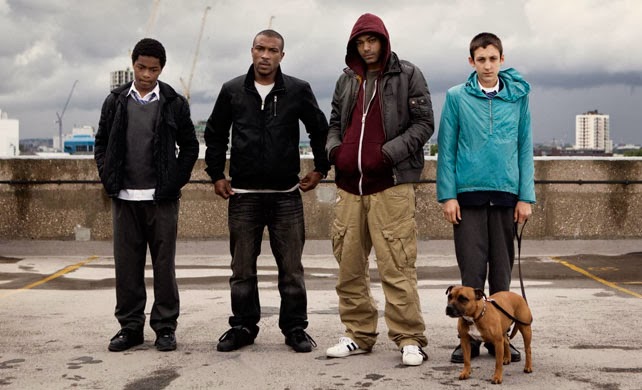
Jane discussed the costumes she designed for the television series 'Top Boy' on channel 4 (shown below). As you can see, they all look extremely natural. Like they are wearing their own clothes. This is what is called good costume design.

Top Boy
Costumes designed by Jane Petrie
I know it's easy to assume that there is no design behind contemporary costume but there is just as much research involved as there would be for period costume, if not more. To make something that is seen in everyday life believable is what's called invisible designing. Analysis of the character's past, present and future is extremely important in order to get into their mindset and think about what they would chose to wear and why.

To make the costume seem lived in it is taking through a process called 'breaking down'. This involves dying, staining and general wear and tear on the costume. This, again, involves a lot of thinking and the designer must consider what the character has done in their clothes. For example, things to consider would be: would the character eat some food and wipe their hands on their trousers causing greasy finger marks? Would the character lean on a table causing wear and tear on the elbow? Does the character have a pet that would leave hair over their clothes? It is this sort of analysis that makes costume design a lot more complex than one might assume and what helps make the character believable and bring them to life.

This video demonstrates basic breaking down at the National Theatre.


I often also get asked the question, "So what is you favourite costume?" 

The purpose of costume is not necessarily to make a beautiful ball gown that's taken weeks to make. In film and TV the best costumes are the ones that you don't notice. The costumes that are true to character and making you believe what you are seeing is when the designer has 'invisibly designed' the costume. When you can just sit and watch a film and not notice any of the design behind it, ironically this is the sort of design that should be noticed and applauded. Just something to think about when you next watch a film or TV show.